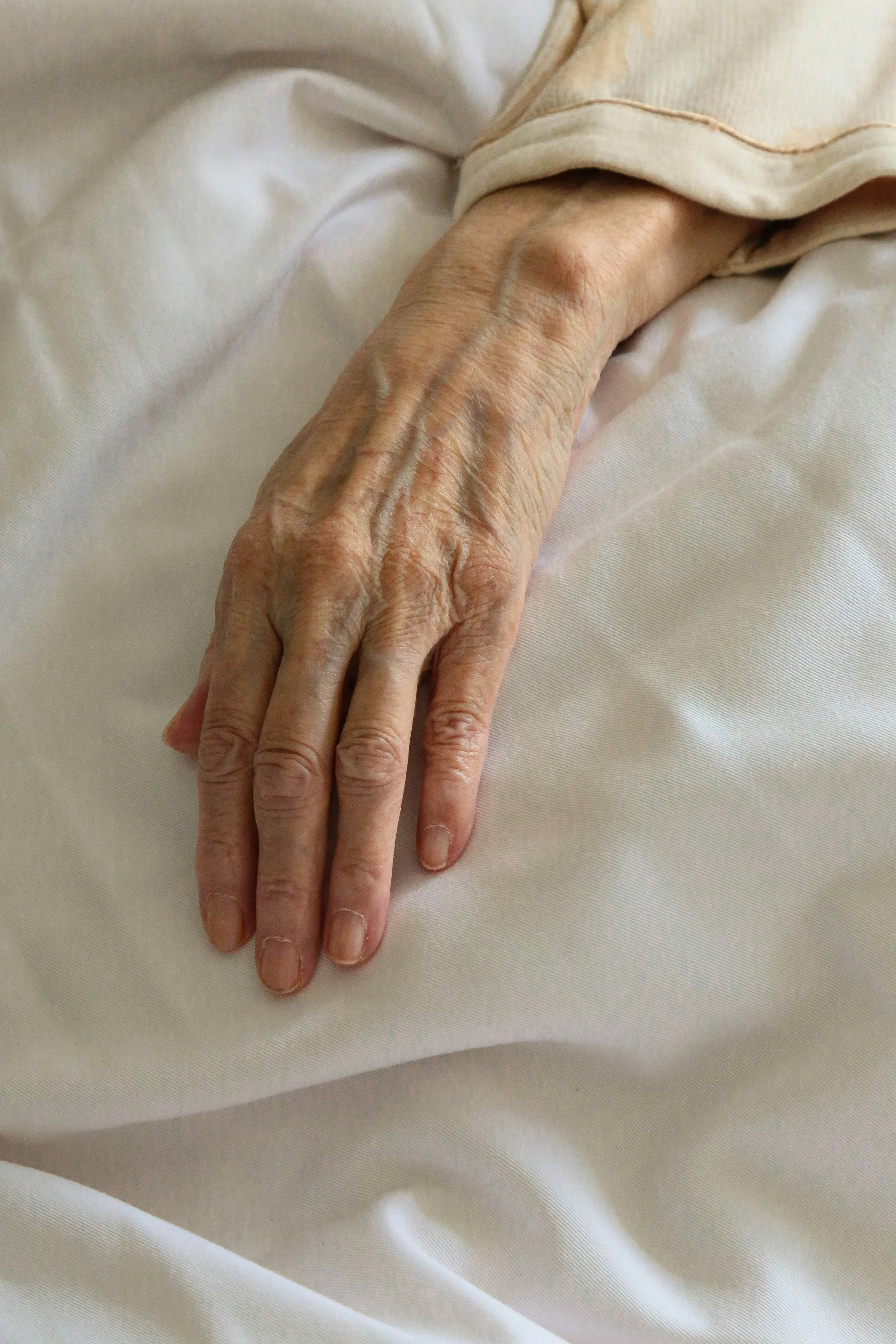
Understanding the dying process
Knowing what happens to someone’s body as they are dying can help to prepare you for the things that might be confronting in the final days of moment of life. Remembering that the body knows how to die and labours out of life, just like how a mother labours a child into life, can be a comforting thought. Carers, family and friends are often afraid that the dying process is painful, although it is generally peaceful in an expected death.
Below are the things to understand about the dying process:
Breathing changes
As someone is actively dying, breathing patterns can become irregular, laboured and even shallow. There may be more time or ‘pauses’ in between breaths.
The ‘death rattle’
The ‘death rattle’ refers to a gurgling sound that people at the end of life can make. This happens when a person can no longer swallow or cough up saliva or mucus due to becoming weaker or the cough reflex diminishing. It is believed that this is not painful for the person.
Changes in skin and body temperature
As someone nears death, there may be changes in their skin. This can be skin mottling, turning pale or grey, or appearing blueish/purple and blotchy. The body may also begin to feel cool in the last days. These things are due to circulation slowing and the reduced blood flow.
Sleeping more or having periods of unresponsiveness
People at the end of life often sleep more or go through periods of unresponsiveness. This is due to the body conserving energy and the metabolism slowing down. Other factors, such as medications, can result in fatigue.
Reduced or loss of appetite and thirst
As someone is dying, their energy needs decrease. The body is shutting down at the end of life, which means there is little or no need for food as fuel. The body and digestive system may also not be able to process food like they once could. Sips of water or moist mouth swabs can be of great help at this time.
Incontinence
During this time, a person may lose control of their bladder and bowels due to the muscles relaxing in these areas. It is important to keep them clean and dry. The use of pads underneath them could be used to keep the bedding clean and dry as well.
Terminal lucidity
Terminal lucidity, or “the surge,” is an unexpected occurrence of clarity and energy before death. Not everyone will experience this, although it can happen.
End-of-life or deathbed visions
This is a phenomenon that can occur for people nearing death. They may see, hear or feel loved ones that have passed before them, which can occur in the weeks or days before death. In most cases, these visions are a source of comfort for those dying. It is important not to dismiss what they are experiencing, but to listen and support.
Hearing
It is believed that hearing is the last of the five senses to go. Even if your person is unresponsive, it is important to remember that they may be able to hear you. Talk to your person, tell them that you are there.
Time of death
Their breathing will stop, and there will be no pulse. Their eyes may be fully or partially open, and their jaw may drop as their face relaxes. Everything is still and quiet.
If it were an expected death, it is important to remember that you can slow down and take your time. There is no need to rush to call a nurse or a doctor. You can touch your person, kiss them, talk to them and lie with them. This time belongs to you and your person, and is a time that you won’t get to do again. Be sure to tell the nurses and doctors that you would like to spend time with them if that is your wish.